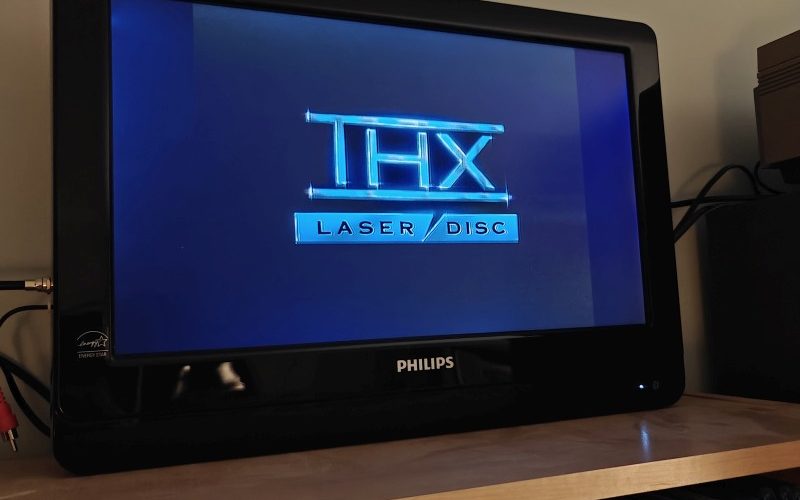
As I continue my seemingly endless descent into the physical media rabbit hole, I’ve become semi-obsessed with laserdiscs, everyone’s favorite ultra-niche analog video format. Developed in the 1970s, and kept alive until just past the year 2000, these gigantic platters look like shiny, metallic vinyl records, or DVDs that have been flattened by a steamroller.

I’m not sure why I’m so into laserdiscs these days. Could it be the 435 lines of video resolution, which sits between the 240 lines of VHS and the 480 lines offered by DVD? Or maybe it’s the inconvenience of having to get up and flip over the disc every 30 minutes? In actuality, I think I’m in love with the large-format, 12-inch slipcovers. It’s like a mini-movie poster, and it’s just fun to stack these next to the vinyl on my shelf.

Prior to this month, I’d only ever seen one laserdisc movie in my life, viewed while visiting a cousin all the way back in 1997. After realizing I’d been collecting discs of late without a player, a friend hooked me up with his ‘backup’ machine, an older Pioneer that offers a coaxial video output and RCA audio plugs.

It weighs about a hundred pounds, but it does the job, and I was able to watch my Japanese-market release of Star Trek: Generations with only a few weird issues I had to fast forward through using a remote that’s the size of a hardcover book.

The bottom line for me? Laserdiscs are a fun, relatively cheap format to hunt down on the rare instances I leave my forest stronghold. I’m now searching for a CRT screen to get the most mileage out of the old school experience (and make up for some of the scan line conversion issues inherent with watching standard def signals on a high def panel).